Smart Choices Start with Real Facts.


Are Bournvita Biscuits Healthy for Kids? 2026 Reality Check
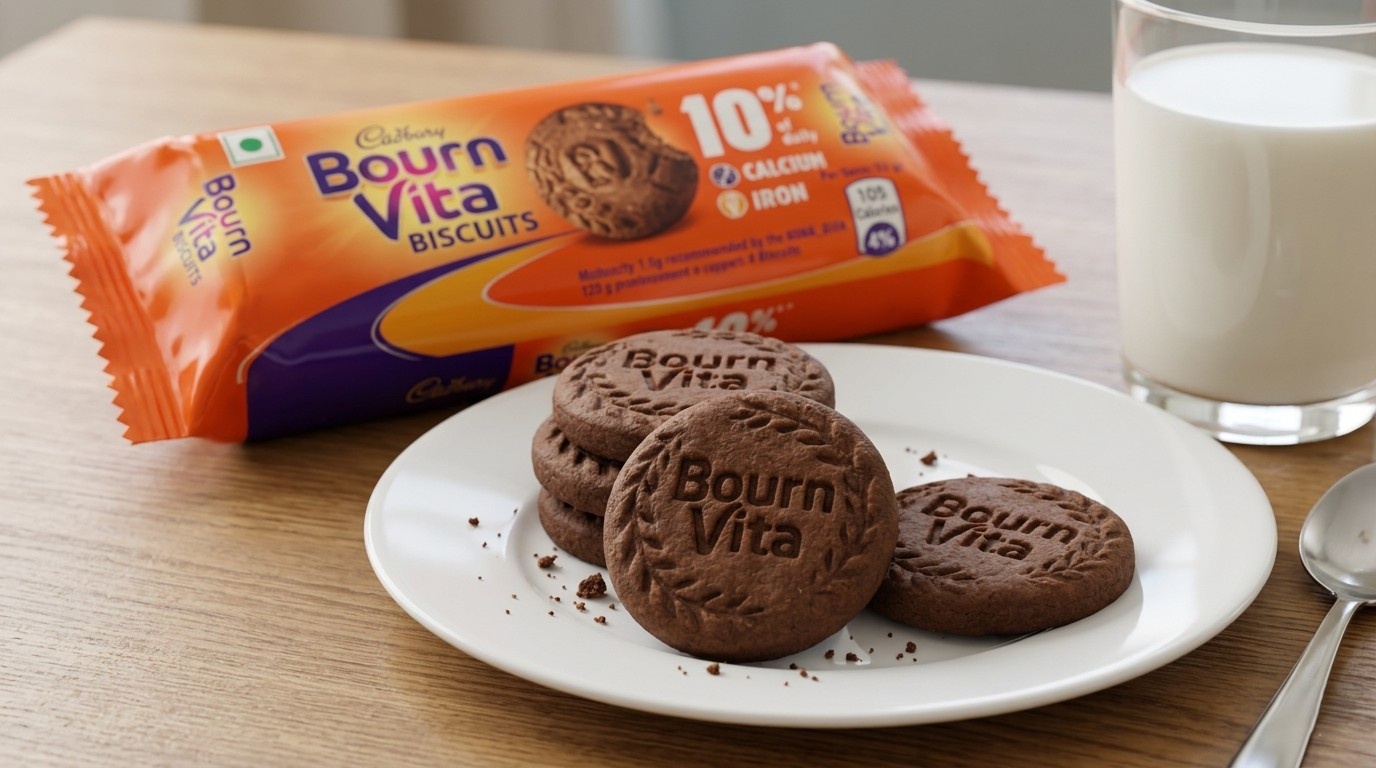
Table Of Contents
✅ Quick Answer
Bournvita biscuits are neither junk food nor a health food. They have some added vitamins, but they also contain sugar and refined flour. They are fine as an occasional snack — not something kids should eat every day.
If you’re a parent, you’ve probably been here.
You’re standing in a store, trying to pick a quick snack for your child. You see a familiar name — Bournvita. It feels like a safe choice. After all, it’s been around for years and is often linked with “health” and “growth.”
So when you spot Bournvita biscuits, it almost feels like a smarter option than regular biscuits.
But here’s the thing most people don’t stop to ask:
Are Bournvita biscuits actually healthy for kids — or do they just seem healthy?
Let’s break it down in a simple, honest way.
What Are Bournvita Biscuits?
Bournvita biscuits are made by Cadbury (sold by Mondelez in India). They have a chocolate-malt flavour — similar to the popular Bournvita drink. The idea is to give kids a tasty biscuit that also has a few vitamins added to it.
Sounds good on the surface. But let’s look at what’s actually inside.
What’s in the Ingredients List?
Here are the main Bournvita biscuit ingredients, explained simply:
- Refined Wheat Flour (Maida): This is the base of the biscuit. It’s white flour that has been heavily processed. It gives very little fibre and raises blood sugar quickly.
- Sugar: It’s listed near the top of the ingredients, which means there’s a good amount of it. More on this in the next section.
- Vegetable Oil (Palm Oil): Used to make the biscuit crispy. Not harmful in small amounts, but not something you want your child eating all day.
- Cocoa Solids & Malt Extract: These give the Bournvita taste. Cocoa has some antioxidants. Malt has a few B vitamins. But the amounts in a biscuit are quite small.
- Added Vitamins & Minerals: This is the selling point — Vitamin D, Calcium, and Iron are added. These are genuinely good for kids. But you’d need to eat quite a lot of biscuits to get a meaningful amount of them.
How Much Sugar Is in Bournvita Biscuits?
This is the part that parents really need to know about.
A small serving of 3 to 4 biscuits has around 6 to 9 grams of sugar. Health experts say kids should have no more than 25 grams of sugar per day — and for younger children, even less.
That means just a handful of biscuits uses up nearly a third of your child’s daily sugar limit. And that’s before you count the sugar in their juice, their cereal, or the biscuits they quietly ate before dinner.
🤔 Real Talk
No child eats just 3 biscuits. They eat 8. Maybe the whole pack. If your child finishes half the packet in one go — which is totally normal — they’ve probably had 15 to 20 grams of sugar just from biscuits. That’s a lot.
This doesn’t mean Bournvita biscuits are uniquely bad. Most packaged biscuits have similar sugar levels. The danger is that the “healthy” image of the Bournvita brand makes parents less careful. You might think twice before giving your child a pack of Oreos, but you might not think twice about Bournvita biscuits — even though the sugar content is not very different.
What Does the Nutrition Table Actually Show?
| WHAT’S IN IT | WHY IT MATTERS | HOW MUCH | GOOD OR BAD? |
|---|---|---|---|
| Calories | Energy for your child | ~70–80 per 3 biscuits | Okay in small amounts |
| Sugar | Gives quick energy, spikes fast | ~6–9g per serving | Watch how much they eat |
| White Flour | Low in fibre, digests quickly | Main ingredient | Not great |
| Protein | Needed for growth | Very little (~1–2g) | Almost none |
| Fibre | Good for digestion | Barely any | Very low |
| Calcium | Strong bones | A small added amount | Some benefit |
| Iron | Healthy blood | A small added amount | Some benefit |
| Vitamin D | Bones and immunity | A small added amount | Some benefit |
The added vitamins are a genuine plus. But the biscuit itself is built on white flour and sugar. Think of the vitamins as a small bonus — not enough to make it a healthy food overall.
Are Biscuits Healthy for Kids at All?
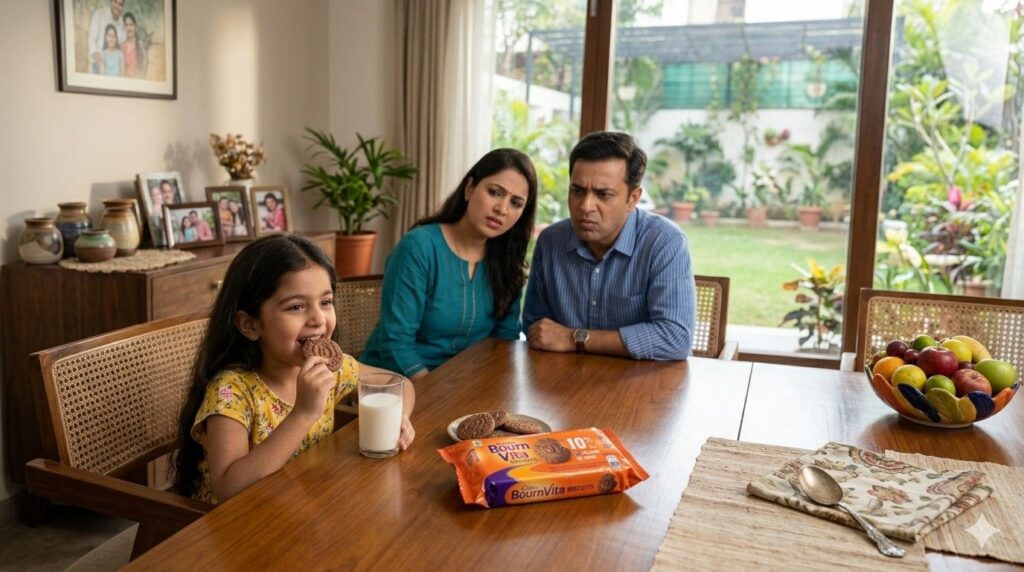
The short answer: it depends on how often they eat them.
No single food ruins a child’s health. And no single food is a superfood either. What matters most is what your child eats most of the time — across the whole day and week.
A biscuit once in a while is just a snack. A biscuit every day, multiple times a day, quietly becomes a big part of your child’s diet — and that’s when it starts to matter.
If your child eats mostly home-cooked meals, fruits, vegetables, dal, eggs, and milk — and has a few Bournvita biscuits sometimes — that is completely fine. No stress needed.
The problem comes when biscuits become the everyday snack. When they replace fruit at 4 PM because they’re quicker. When your child keeps asking for “just one more” and ends up eating the whole pack.
What Age Are They Suitable For?
Bournvita biscuits are not suitable for babies or toddlers under 2 years. The sugar content and white flour make them a poor choice for very young children whose eating habits are still being formed.
For children above 3 years, they are okay as an occasional treat — not as a daily staple.
How Often Can Kids Have Them?
A simple rule: 2 to 3 times a week, in small portions (about 3 to 4 biscuits), is reasonable. Pair them with something more filling — a glass of milk, a banana, or a small handful of nuts.
This way, the biscuit is just one small part of the snack, not the whole thing. Your child gets the taste they enjoy, and you’re not overloading them with sugar.
Better Snack Options for Kids
If you want your child’s snack time to actually give them something good, here are some simple swaps that kids genuinely enjoy:
🍌 Banana + Peanut Butter
Sweet, filling, and full of natural energy. Most kids love it.
🥛 Milk + Boiled Egg
Classic combo. Great protein and calcium. Keeps kids full much longer than biscuits.
🥜 Roasted Chana or Makhana
Crunchy, tasty, high in protein. Much better than biscuits for daily snacking.
🍎 Fruit Chaat
Seasonal fruits with a little chaat masala. Natural sugar, fibre, and vitamins all at once.
🍞 Whole Wheat Toast
With butter or a nut spread. More fibre than regular biscuits, and just as easy to pack.
🧀 Paneer Cubes
Great source of protein and calcium. Lightly seasoned and easy for kids to eat on the go.
None of these take long to prepare. And most of them will keep your child’s energy steady — unlike a biscuit, which often leads to a quick sugar rush followed by crankiness.
The Marketing Angle — Be a Smart Shopper
Here’s something worth knowing. The Bournvita brand is trusted by millions of Indian parents — mostly because of the famous Bournvita drink. That trust carries over to the biscuits, even though the biscuits are quite different from the drink.
Words like “enriched,” “vitamins,” and “goodness” on the front of the pack are there to make you feel confident about buying the product. That’s how food marketing works.
The real story is always on the back of the pack — in the ingredients list and the nutrition table. Flip it over. Look at how much sugar is listed. Check where sugar appears in the ingredients (earlier in the list = more of it).
This habit — reading the back of the pack — will help you make smarter choices across all packaged foods, not just biscuits.
⚖️ Final Verdict
So, Are Bournvita Biscuits Healthy for Kids?
No, not really — but they’re not harmful in small amounts either.
They have some added vitamins, which is a small plus. But the base is white flour and sugar, which isn’t great for everyday eating. They are closer to a regular biscuit than a health snack.
Give them to your child as an occasional treat — not as a daily habit. Make sure most of their food comes from real, whole foods like fruits, vegetables, eggs, dal, and milk.
If Bournvita biscuits are a sometimes snack in an otherwise balanced diet, your child is going to be absolutely fine. You don’t need to stress — just stay aware.
Good parenting isn’t about being perfect with food. It’s about being informed and making mostly good choices. Now you know the truth — and that already puts you ahead.
This article is for general information only. It is not medical or dietary advice. Please speak to your child’s doctor or a nutritionist for personalised guidance.